Source: Japan tests AIREC robot to roll patients, easing caregiving challenges
This blog post is based on my contribution to Japan’s AI Adoption Gap Is Not a Technology Problem | The Economy Review.
Inertia in Corporate Competition
In fact, the concerns of slow AI adoption raised by Professor Akira Kohsaka from University of Osaka has been under my expectation for years. It’s not surprising to see that Japanese firms are reluctant to accept the new change and they sorta build a cartel to jointly disregard foreign-developed advanced technology within the Japanese corporate culture. It’s because of lack of competition within the fully interwoven Japanese corporate ecosystem. And, for the past 40+ years, we have seen virtually no growth in Japan that not many global players enter the Japanese market for more profit.
Given the corporate culture, students are in no hurry to learn new skills, which means no pressure on educational curriculum in K-12 and universities.
Japan has been known for its inertia for decades. For AI, the situation isn’t different. If the trend proceeds for the next a decade, we may categorize Japan as one of the advanced countries that does not have much AI productivity boost.
Inertia in Education
Every time we have discussions on East Asian expansion plans, I often tell them that potential outcome in Japan will very much be like the same as what we have experienced in Korea, although the story might be slightly different.
In Korea, after witnessing shameful grad school education for AI, with no math but mostly focused on shallow copy and computer-dependent coding variations on deep-learning, I thought that math-based hard science education would attract some smart kids and may become the core of the market change. The active participation was way below sustainable level (70+ students in 3 years and almost no prospect of additional students in subsequent years), because Korean corporates were not ready to properly utilize this western-trained scientific minds. Most successful graduates finished the program with supreme quality academic dissertations, but they all struggled with local job market. Eventually a majority of them ended up with overseas employers from the 1st world. (North American and European). While struggling with corporate inertia and ignorance on cutting edge science, I also had to confront with countless bullying and mobbing on the school’s identity, qualifications, and sometimes attacks on my personal credentials. (Some online rumors not only questioned on my UK/US grad school degrees, but also on my Korean undergrad degree from SNU, Korea’s top university. I eventually had to take a legal action, but the school’s brand image was already tarnished by then.) Let’s say that Korean market’s unwillingness to accept unknown foreign authority was not pinned on the quality of education (because they can’t understand the quality), but by defamation to the foundation of the authority. (because they can’t understand anything but Harvard and Oxford). After three painstaking years of hard try, my team has never turned back to the market.
In Japan, although the appreciation would be much more acceptable than the self-centered Korea, because the market does have intellectuals that understand the European quality of education, but the Japanese corporate led job market situation won’t be that different from Korea. Most decent Japanese corporate jobs have this so-called Maginot Line for colleges in that MARCH is the minimum requirement. MARCH is an acronym for five mid-to-high tier private universities, which is the symbol of the century old university rankings in Japan and the another manifestation of inertia in Japanese education. Japanese students hardly look for outside options, and once they get a job that they like, they tend to stay in the job until retirement.
So, if GSB under SIAI tries to do marketing in Japan, we most likely will end up with students outside of the league. And, most grads from our education won’t be able to find a decent Japanese corporate job, because the corporate HR won’t take the risk of hiring a candidate outside of the system.
I guess Japan still is a symbol of arch-perfect Asia to western seniors, but the country is dead in spirit, at least for the corporate side. Outsiders will become a bystander at best, if not banned. Again, every time I hear their imaginary fantasy on Japan, I really want them to feel the reverse racial discrimination in Tokyo’s corporate culture.
Inertia in Academia
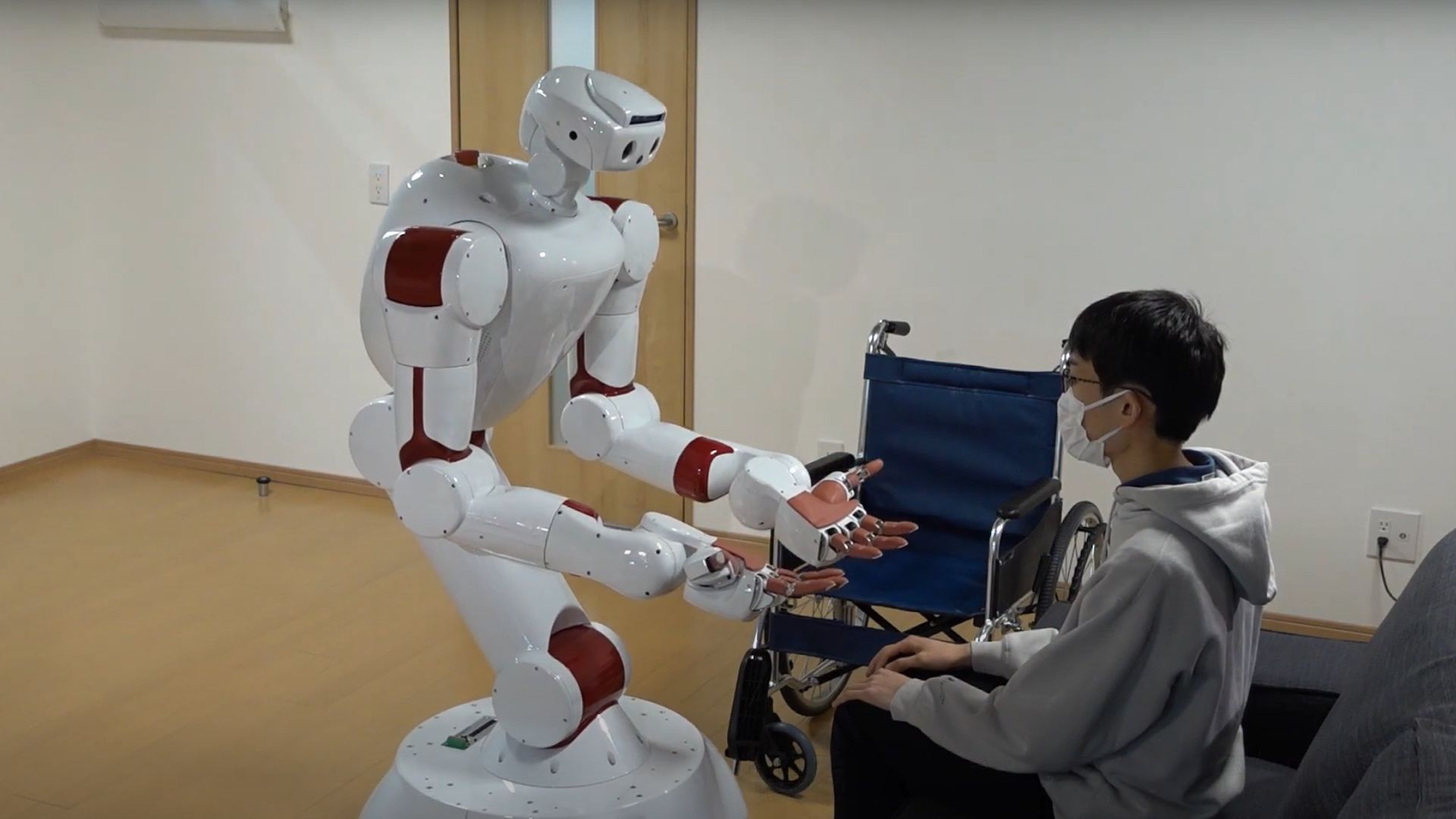
In fact, the hero image of this post is another obvious manifestation of how narrow and limited the Japanese AI engineering and robots departments think. They could have tried a two-leg walking humanoid, like American and Chinese labs and firms do nowadays. But they did not want to take the risk. That roller panel style robot foot or robot stand dates back to 1980s, as far as I remember. Why is it not preferred anymore? The roller foot makes the robot a disabled man on foot, because it can’t walk on stairs. It needs a slide, just like people on wheelchairs. It’s a safe secondary bet, but with recent researches on human bone structures on knees and elbows that have been tested and applied on robots, one does not have to take the low-risk and low-return option anymore.
Yet, after millions of dollars of government subsidy, the best that the university lab can display for public appearance is the footless robot. You can only imagine how much tax Yen have been wasted.
I have no detailed knowledge of how the robot lab would end up with that 1990s robot in 2025 and 2026, but I am almost certain that the professor, the lab leader, still lives in 1990s, at least mentally and academically. Just like a majority of Korean professors in local universities’ engineering departments. Immediately after they become a professor, they begin to think about how to play well politically in the professor society, instead of reading up-to-dated researches and trying to apply the new knowledge to sharpen his/her own understanding of the subject. No one does research, so if you do it hard, then you break the cartel’s equilibrium. Saving faces of senior professors by not working hard on serious research is one way to get adored by the school’s academic committee to get tenure. Such hard-working researchers and professors will be seen as 迷惑(めいわく), a disturbance breaking the supreme balance of Japanese harmony, which they call it by ‘Wa(和)’.
If the same situation happened in China, now in these days, the authority will step in and disposition him/her from the professorship, right away. The most ideal situation will be the western way that schools and companies no longer sponsor him or offer him a project, thus the professor becomes an invisible faculty or a ‘useless eater’(unnützer Esser), borrowing a famous Nazi term, just to emphasize how extreme the social outcasting would work.
I am not a big fan of the authority-driven Chinese method (and definitely not the Nazi method), but given the inefficiency that we now see in Japan (and Korea), once the symbol of ultimate technological leaders, such a drastic and definitive punishment on an incompetent academic authority with outdated knowledge maybe better than politically-driven academic cartel and total collapse of innovation in the entire society. After all, professors are paid not because they once have done some research in their 20s and 30s, but because they are the beacon of academic progress in the country. The footless robot in the hero image, from my perspective, is the outright manifestaion of academic inertia, if not humiliating incompetence and shameful conservatism.
Source: Shutting Out the Sun: How Japan Created Its Own Lost Generation (Vintage Departures): Zielenziger, Michael
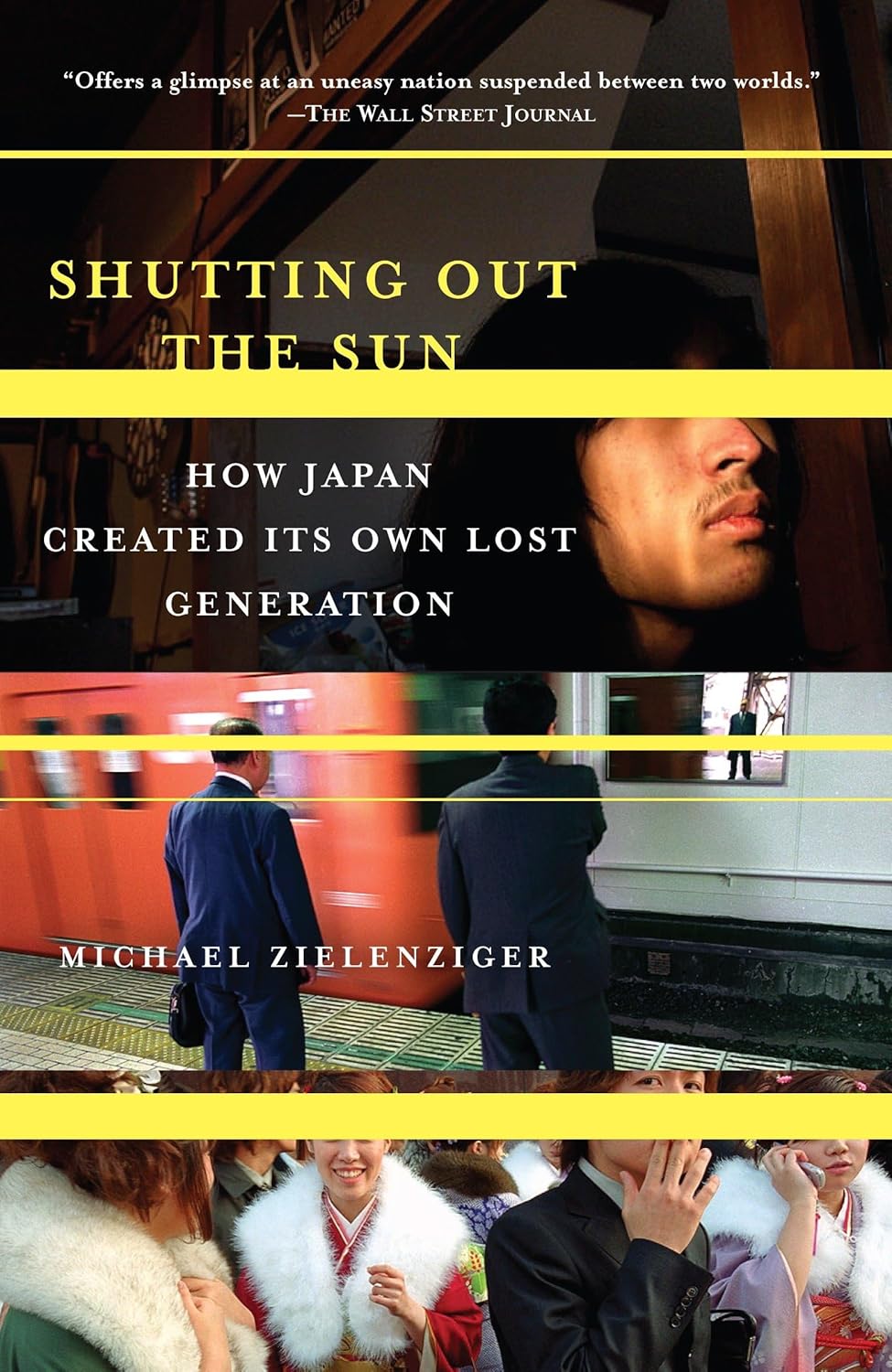
Shutting Out The Sun - Inertia in Japan (and Korea)
- Bashingu, Pashingu, and Noshingu
This is a famous Japanese expression that they usually say it to themselves with self-deprecating tone. In 1980s, American merchantilists had been ‘bashing’ Japan in order to not admit that Japanese factories had better efficiency than Americans’. Then in 1990s, after (South) Korea taking over the Asian factory position, the merchantilists had begun ‘passing’ Japan. From 2000s and on, as China has become not just Asian factory but the world’s factory, Japan has become ‘nothing’. Reading the three words in Japanese style, or racially discrimative accent, you can get
- From: Bashing, Passing, and Nothing
- To: Bashingu, Pashingu, and Noshingu
(For more details, read the following book’s Chapter 14: Shutting Out the Sun: How Japan Created Its Own Lost Generation (Vintage Departures): Zielenziger, Michael)
Except the sudden historic boom on semiconductor due to American and Chinese hegemony competition on AI, the ‘bashing’, ‘passing’ and ‘nothing’ are pretty much what have happened and what will continue to happen in Japan (and in South Korea).
In Asia, due to the collective agricultural socialism, the Japan’s proud spirit of ‘Wa(和)’ is the very cause of the past 40 years of inertia that no one says ‘No’ to others, especially to respected senior people like a professor. Korea also has entered the same doldrums from 2010s, since the leftwing leader, a human rights lawyer without global-tier insights on running a country, led the impeachment on the rightwing president in 2016.
European sailors in the 17th century often ended up dead in the equatorial windless zone, when they crossed the Atlantic. Galleons might have been the foundation of the powerful Invincible Armada, but once they sailed to the windless part of the Atlantic, the doldrums zone, wind-powered ships had become completely impotent.
I think Asian societies, particularly Japan and Korea, the two most advanced countries that western powers can no longer ignore, cannot avoid their own death march to the doldrums zone, unless they go back to the dictatorship (or invent fossil fueled ships or planes) that China is now so well playing that almost provokes the US and Europe all together with renewed fear of ‘Yellow peril’.
Japan certainly is on the revival track with the new Prime Minister Takaichi Sanae with her mega ultra rightwing policies. The cost of the extreme stance is unmeasurable, details of which are in Japan can’t hedge against Trump without stabilising relations with China | East Asia Forum, but Japanese voters have anyway chosen to pay for it instead of sitting on almost half-a-century-long inertia on almost all sectors. They begin to see the demerits of ‘Wa(和)’.
Korea lost the last 10 years because of a record level incompetent leader and leftwing propaganda in every corner of the society. The one president that led the impeachment of the rightwing leader in 2016 was even publicly mocked for his inability to read a guide memo for the US-Korea summit discussion by President Trump, a high probability candidate of the America’s most short-sighted leader in the 21th century. (An idiot calls another idiot an idiot. A rare competition that I am still willing to call Trump a winner.) In fact, Korea has not been lucky to have any pragmatic and foresighted leader since 1990, with an arguable exception of Lee Myung-bak - Wikipedia.
Can Asian countries invent their own fossil-fueled ships to get out of the doldrums? Or is the 21st century version Asian dictatorship + die-hard ultra-nationalism the new planes and jet fighters to cross the doldrums for Asia? Well, this is not the question that I want to waste my time for an answer. Their hustles and bustles, not mine.
Anyways, wind has definitely stopped in Japan (and Korea). Hong Kong is re-bounding, but will surely be dragged into a war, when China crosses the strait of Taiwan. It’s not the question of how or if, but when. It will happen, very soon. Thus, our only reasonable, safe, and forward-looking Asian HQ option is Singapore, unless the Euro HQ wants one of us to become the war victim or fight in the hopeless doldrums without jet fighters. As a former combat infantry and a Korean scholar with painful doldrums experience, I choose neither.