Many prospective students to GSB’s AI MBA mostly check MSc AI/Data Science’s introduction page and walk away. It looks like most of them think they are entitled to study in the program for top 0.01% intelligence level, which is quite mindful user behavior that we monitor from web log.
We’ve had the test in Korea with 10 students already, while most of them either had the US/EU’s mid-tier grad school/PhD degrees or Korea’s top engineering program’s PhDs. So far, I let only 3 of them to graduate. There is a good chance 1 more student to graduate, if the dissertation comes in a single piece. Other students? They all disappeared at some point of the coursework. In fact, for 2 of them, I strongly encouraged to do AI MBA, not MSc AI. They refused, and got 0/100 on all 4 courses in the first two terms. They also disappeared. I think one of them did not even submit the final term paper for the 4th course.
There were about 20-30 more students argued with me that they deserved to be in MSc AI/Data Science. Immediately after they saw the first course’s exam, many of them disappeared right away, and a few of them compromised with AI MBA’s technical track. (Those disappeared have become 0-star reviewers of GSB’s education. I guess we scratched their ego too harshly.)
Truth is, the first course for regression analysis, which I believe is the basic math/stat training for any STEM grad program, is similar to UK top school’s MSc first courses. Most of them are equivalent to the US’s PhD coursework, but since it is AI/Data Science, we have modified the course structure more for computational science than pure statistics.
Yet, that’s the reality that we see. Many degrees they got from other renowned schools actually did not train them hard enough to survive in a slighly modified degree program’s first grad course.
It’s not like I begin to question other renowned schools’ quality of training, but I do begin to disbelieve what people say they can do, even for the ones with STEM degrees from world-class schools. (which also is a lesson that at GSB, we shouldn’t be lighthearted on teaching.)
For GSB, we recently had two topics in discussion.
- Will we ever be able to run MSc AI/Data Science, until the GSB’s reputation reaches at global top tier?
- What’s the realistic goals for AI MBA’s tech track and biz track?
For the tech track, we teach the UK top schools’ 2nd year undergrad level STEM courses, with some modifications for AI MBA, meaning more hands on and real business applications. We periodically role out final exams and term papers to public, so take a look on the GSB’s website by yourself. According to ChatGPT, the term papers for CS department’s course names do test topics what computer science courses would test, but in a format that a corporate decision maker would and should do. I don’t entirely believe what ChatGPT says, but we are kinda proud of what we and how we teach for that matter.
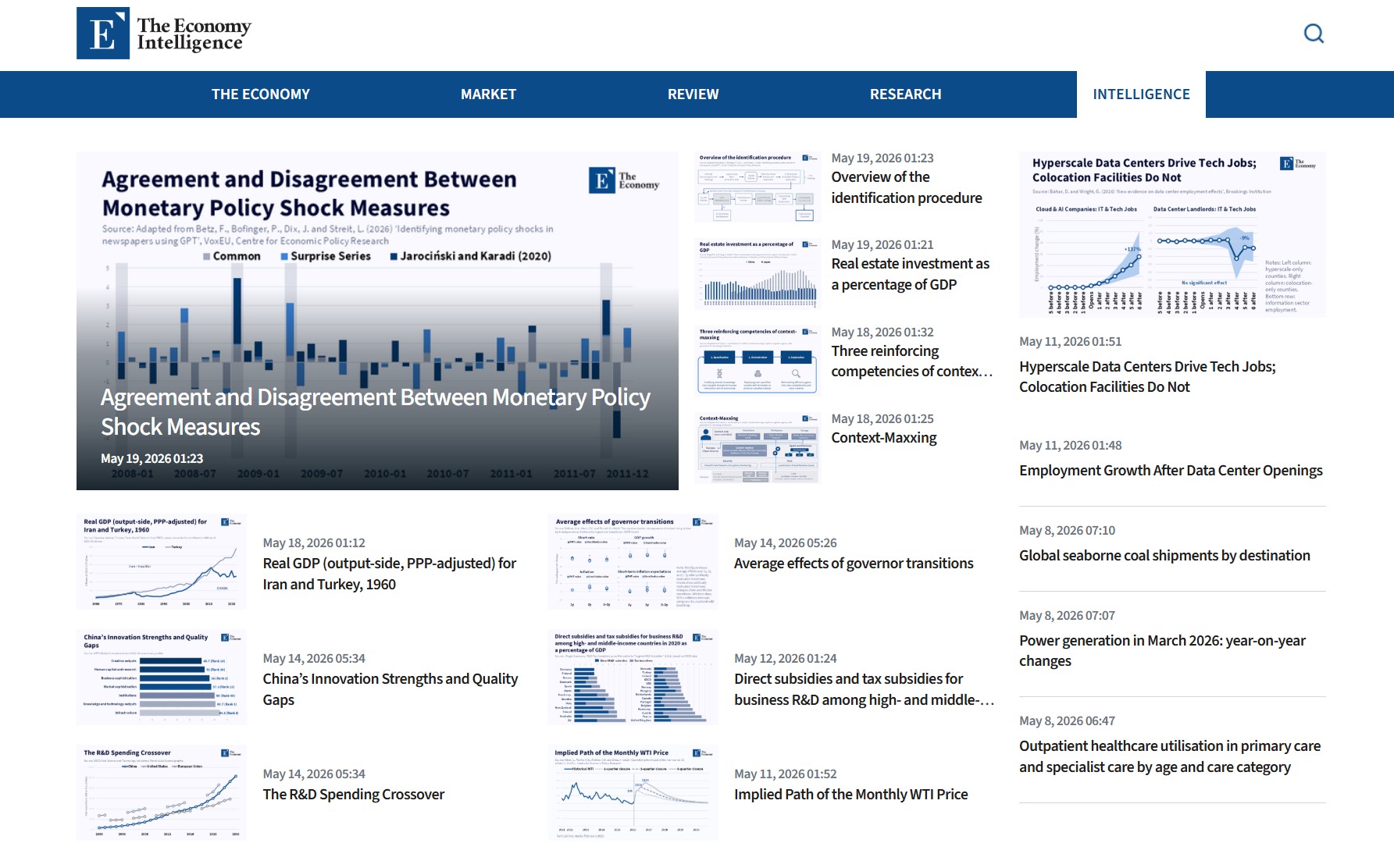
For the biz track, my realistic target is a Business Intelligence or Data Analytics. The Economy Intelligence, the data support service for The Economy’s research team, is one example.
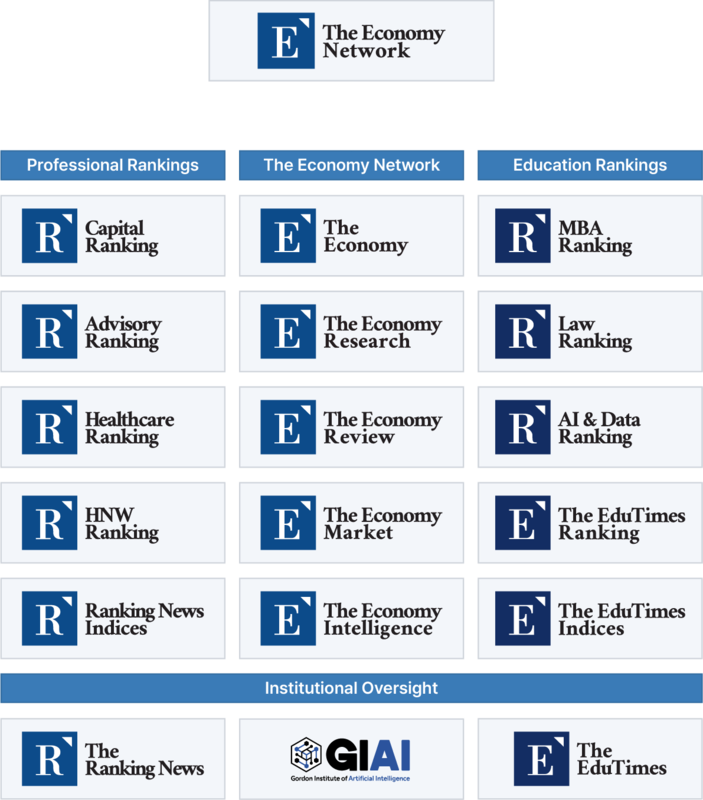
That service is the backbone of The Economy Network’s ranking services. (Attached the organizational chart of The Economy Network as of May 2026, which shows a bunch of ranking sub-services within The Economy’s network.)
Despite the ambitious brand name of the think tank, The Economy, since it is not a well-known brand like The Economist, when we first introduce the rankings from the ranking sub-services, we often are laughed at or mostly are ignored by the chosen firms for the world’s Top 20 in their own sectors. But, the candescending faces suddenly become possessed by the most humble man in the world, when they check the intelligence page and research articles relying on the intelligence.
(The brand name, The Economy, in a way, is a too heavy name to run and support the contents. I do admit that we have a high upper limit in the brand, but filling the expectation with persuasive quality of contents is a total challeng. This is precisely why we have a dedicated Business Intelligence team with data expertise and deep econometrics/statistics backgrounds. This single layer is as critical as a bunch of PhDs and global thought-leaders, given the clients’ reactions in corporate discussions.)
For GSB, the biz track AI MBA is the lowest academic tier training, but still requiring deep sense of data visibility, effectiveness, and modern database structure to stream service on the acaedemically dedicated services like The Economy Intelligence. In other words, despite the lowest scientific challenges a student has to cross, the biz track indeed is an ideal training for business-ready students, which what MBAs are supposed to train for.
Back to the weekly discussions for GSB’s next steps, I told them in the meeting that our focus should be how to persuade the entitled students who believe they possess top 0.01% intelligence to choose to do what their intelligence level allows them to do.
Despite years of persuasion and ‘fight’ against the entitled students, I still don’t have the answer. Back then, when I was a student, when I saw an insurmountable wall or a crazy genius, I had chosen to willingly give up. I might belong to 0.01%, but not 0.009%, I thought. For the same purpose, we often publicly share our class notes and other students’ work on the GSB’s webpages. I hope the information sharing helps them to feel what I felt, but I still see 100 visits on MSc AI/Data Science and 0 visits on AI MBA.
One thing I often say to MSc AI/Data Science students is that the high intelligence that allows them to finish the MSc’s coursework and dissertation does not necessarily mean that they can do what excellent Business Intelligence team can do. In fact, I am sure that The Economy Research team needs more BIs than MSc grads.
Why? Hard researches can be mostly done within the brains of the researchers, and the parts needing RAs now can be done by ChatGPT (or other LLMs), as long as we pay for (super expensive) token. But the business intelligence part cannot be done by LLMs. The logical steps to find the right supporting materials and to re-design the existing data’s new visual representation hardly can be done by any LLMs. In this sense, higher intelligence (but still not high enough to lead one’s own research to produce thought leadership quality research) can be a curse. That may end up with no job, especially in the age of LLM-based AI. Or one might have to compromise a lot in job searching.
This might not be the best way to convince those entitled students without enough intellectual strength to go through the MSc, but I do hope that they see no compromise in one place may end up with huge compromise in another.